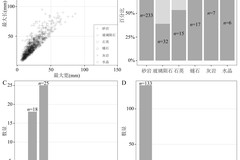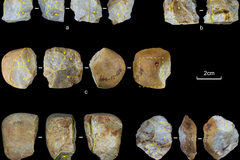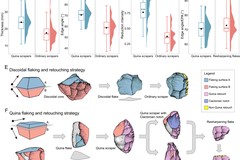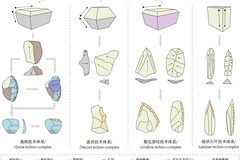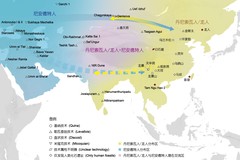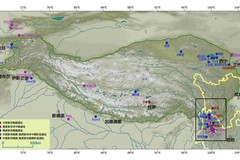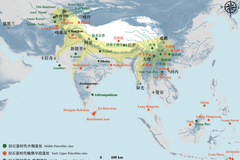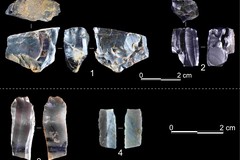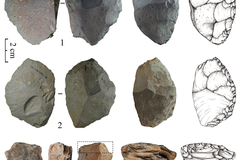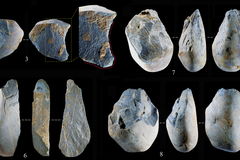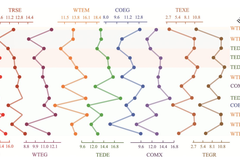
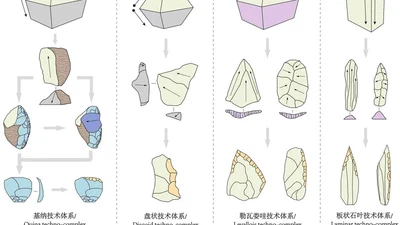
Discovery and advances in the study of Middle Paleolithic Quina technology in southwest China (in Chinese)
Reviews the discovery, characteristics, and research progress of Quina-like Middle Paleolithic technology in Southwest China.

 🪨
🪨Welcome to my website!
I am a PhD student in archaeology at the Institute of Tibetan Plateau Research, Chinese Academy of Sciences. I am currently a visiting student in the Department of Anthropology at the University of Washington. My supervisors are Professor Hao Li and Professor Ben Marwick.
My research focuses on Middle Paleolithic technological behavior and human adaptation in East Asia. During my master’s studies, I investigated Quina retouch in Southwest China. In my doctoral research, I am examining core reduction technology across a broader region of China.
Methodologically, I am particularly interested in quantitative approaches. My current work mainly combines 3D geometric morphometric analysis with data analysis in R and Python. I believe that quantitative methods represent an important direction for the future development of Paleolithic archaeology, as they allow us to better understand past human technological behavior and cognitive decision-making from a more objective perspective.
I am also strongly committed to Open Science. By making data and code openly available, I hope to contribute to making lithic study more reproducible and, in the long term, to supporting the development of truly large-scale data-driven research in Paleolithic archaeology.
PhD in Archaeology
2024.09-
Institute of Tibetan Plateau Research, CAS
MA in Archaeology
2021.09-2024.06
Institute of Vertebrate Paleontology and Paleoanthropology, CAS
BSc in Animal Science
2017.09-2021.06
Nanjing Agricultural University
Reviews the discovery, characteristics, and research progress of Quina-like Middle Paleolithic technology in Southwest China.
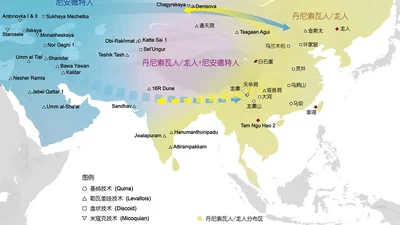
Introduces the discovery of Middle Paleolithic Quina technology in Yunnan and discusses its relevance to debates on Neanderthals in China.
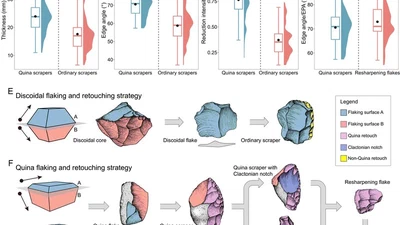
Identifies a coherent Quina lithic technological system in East Asia and discusses its implications for Late Pleistocene human behavioral diversity.
Conference paper, 91st Annual Meeting of the Society for American Archaeology.
Conference paper, International Union of Prehistoric and Protohistoric Sciences (UISPP).
Conference paper, SEAMEO SPAFA International Conference on Southeast Asian Archaeology and Fine Arts.